
¡WEPA! líbros
 Every Language Deserves a HomeA multilingual literacy organization connecting children, educators, libraries, and families with authentic literature from around the world. |  |
What happens when a child walks into a classroom or library and cannot find a single book in the language spoken at home?
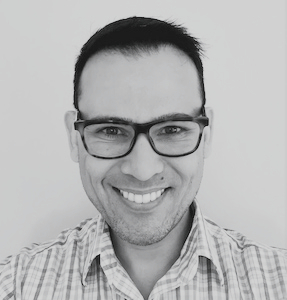
For Verónica Ramos, founder and CEO of ¡WEPA! líbros®, that question sits at the heart of the work. Verónica spent more than a decade in education before founding ¡WEPA!—first as an ESL educator, then in educational leadership, and eventually at the university level as an instructor and mentor to future bilingual educators in Chicago. Her commitment to multilingual communities has also extended beyond the classroom through volunteer work supporting refugee resettlement, immigrant education, and migrant students.
Across those experiences, she saw extraordinary linguistic diversity in children and families—and a persistent gap in the resources available to serve them. Schools and libraries wanted books for their multilingual communities. Educators wanted children to have access to literature in their home languages. But finding high-quality, culturally authentic books across many languages was often difficult. Too often, multilingual access meant relying primarily on books originally created in English and later translated.
¡WEPA! líbros was created to help change that.
Bringing the World’s Stories Closer to Home
¡WEPA!’s original mission was simple: make high-quality multilingual literature more accessible to children in the United States. That meant looking beyond what was readily available domestically and building relationships with publishers and book partners around the world.

Today, ¡WEPA! líbros sources literature in 26 languages from more than 35 countries.
The goal is not simply for a child to understand the words on a page. It is for children to encounter stories that feel familiar—to recognize names, families, traditions, humor, places, illustrations, and ways of living that reflect a world they know. It is for them to experience their home language not only as something spoken between family members, but as a language worthy of literature, learning, imagination, and joy.
And for a child learning a new language or navigating life between languages, access to the home language does not compete with learning. It honors an important part of who that child already is.
From One Idea to a Growing National Community
What began as an effort to solve an access problem has continued to grow. ¡WEPA! now partners with schools, districts, public libraries, and educational organizations across the United States—helping communities create spaces where multilingual children and families can see their languages represented.

¡WEPA!’s growing national partnership reach.
Along the way, ¡WEPA! has become a nationally certified woman- and minority-owned business and has received state-level recognition in Massachusetts as a multilingual literacy partner supporting early learning. These milestones matter not simply as markers of growth, but because they reflect a widening recognition that multilingual literacy access belongs within the educational landscape.
Books Open the Door. People Build What Comes Next.
As ¡WEPA! worked alongside educators and library professionals, another lesson became increasingly clear: getting the books there is only the beginning. A multilingual collection has its greatest value when children are reaching for the books, educators know how to bring them into learning, families feel invited into literacy experiences, and organizations continue investing in multilingual access year after year.
That understanding has expanded ¡WEPA!’s work beyond sourcing books. Today, the organization supports multilingual literacy through authentic literature, educator learning, family and community partnership, and long-term program development.
Sometimes that means helping a librarian thoughtfully grow a collection in languages they do not personally speak. Sometimes it means helping educators understand how multilingual literature can live within instruction. Sometimes it means creating opportunities for families to choose books together in their home languages. And sometimes it means helping an organization think beyond a single purchase toward what multilingual access could look like several years from now.
Different communities need different things. The common thread is a belief that multilingual learners deserve more than a shelf of translated materials tucked into a corner.
Looking Forward
¡WEPA! continues to grow—reaching new communities, developing new international publishing relationships, expanding access to additional languages, and helping educators build stronger multilingual programs. But growth itself is not the destination.

Verónica Ramos speaking at the Diversity in Publishing Stage
during ALA 2026 in Chicago.
The larger vision is a future in which finding books in a child’s home language is no longer unusually difficult. A future where educators have the resources and confidence to support multilingual learners. Where families’ languages are viewed as assets. And where a child entering a school or library can discover that the language of home belongs there, too.
For Verónica—whose academic background includes a B.A. in Spanish Language & Literature, a master’s degree in Educational Leadership, and specializations in Bilingual and Special Education—the work remains deeply connected to education. Her path has moved from ESL classroom teacher, to educational leader, to bilingual teacher educator, to founder of a national multilingual literacy organization. But the purpose underneath that path has remained remarkably consistent.
Because behind every language, every book, every country, and every dot on a map is a child.
And every child deserves to find a story that says: Your language belongs here.


Comments